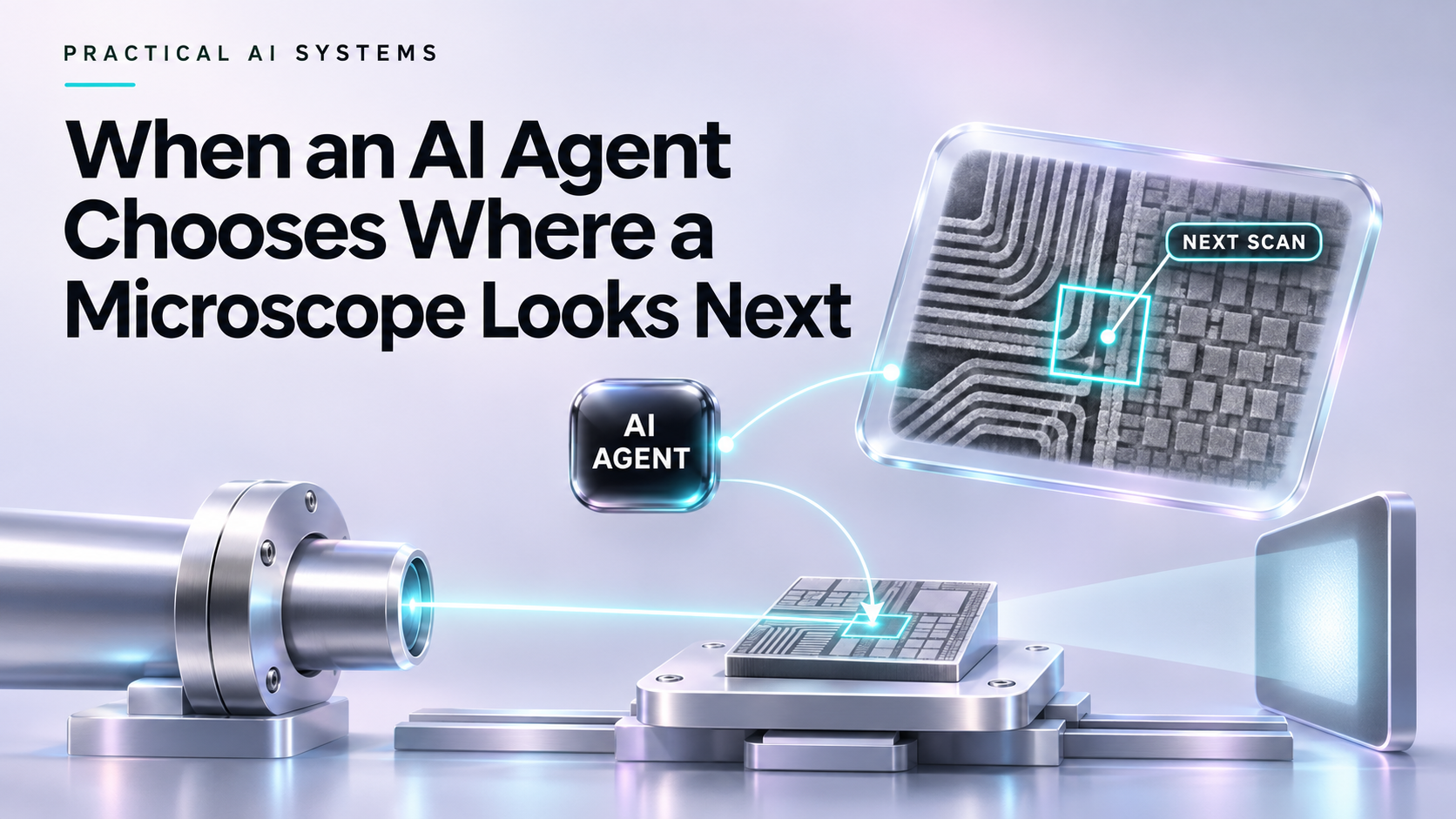
A researcher asks a microscope to locate the boundary between two regions of a chip. The system scans, examines the result and chooses where to look next.
That is the experiment described in Argonne’s 5 October 2026 report. The interesting part is the connection between an instruction, an image and the next physical action.
For anyone following software agents, this is a useful question: what changes when an agent’s tools operate scientific equipment?
Finding the right spot is part of the experiment
A powerful microscope still needs direction. Which area deserves a closer look? Is the feature partly outside the image? Should the next scan cover more ground or reveal finer detail?
A simple analogy is searching a large map through a small window. You recognise a fragment, shift the window and inspect again. The destination is clear; the exact route emerges as you look.
The earlier EAA research describes this difficulty: local scans can reveal details that a coarse overview misses. The search depends on interpreting what appears, rather than following coordinates known in advance.
What Argonne demonstrated
The SYNAPS-I team tested its system on microelectronics at the Advanced Photon Source’s 26-ID beamline. A natural-language instruction set the target. The agent then searched through images until it located the requested interface.
Several components contributed. PtychoFM reconstructed images from the measurements. A vision-capable language model interpreted them, while SAM3 helped separate features within an image. Once the target was found, the system could move to a higher-resolution scan.
Argonne reports that routine actions can proceed autonomously, with human approval or guidance for higher-risk or uncertain operations.
The result is a laboratory demonstration of a connected workflow. The report does not establish that every feature, sample or instrument can be handled this way.
How the pieces share the work
Ptychography builds an image computationally from overlapping measurements of scattered X-rays. The reconstruction software and the agent have different jobs: one produces a view of the sample; the other uses available evidence to select an action.
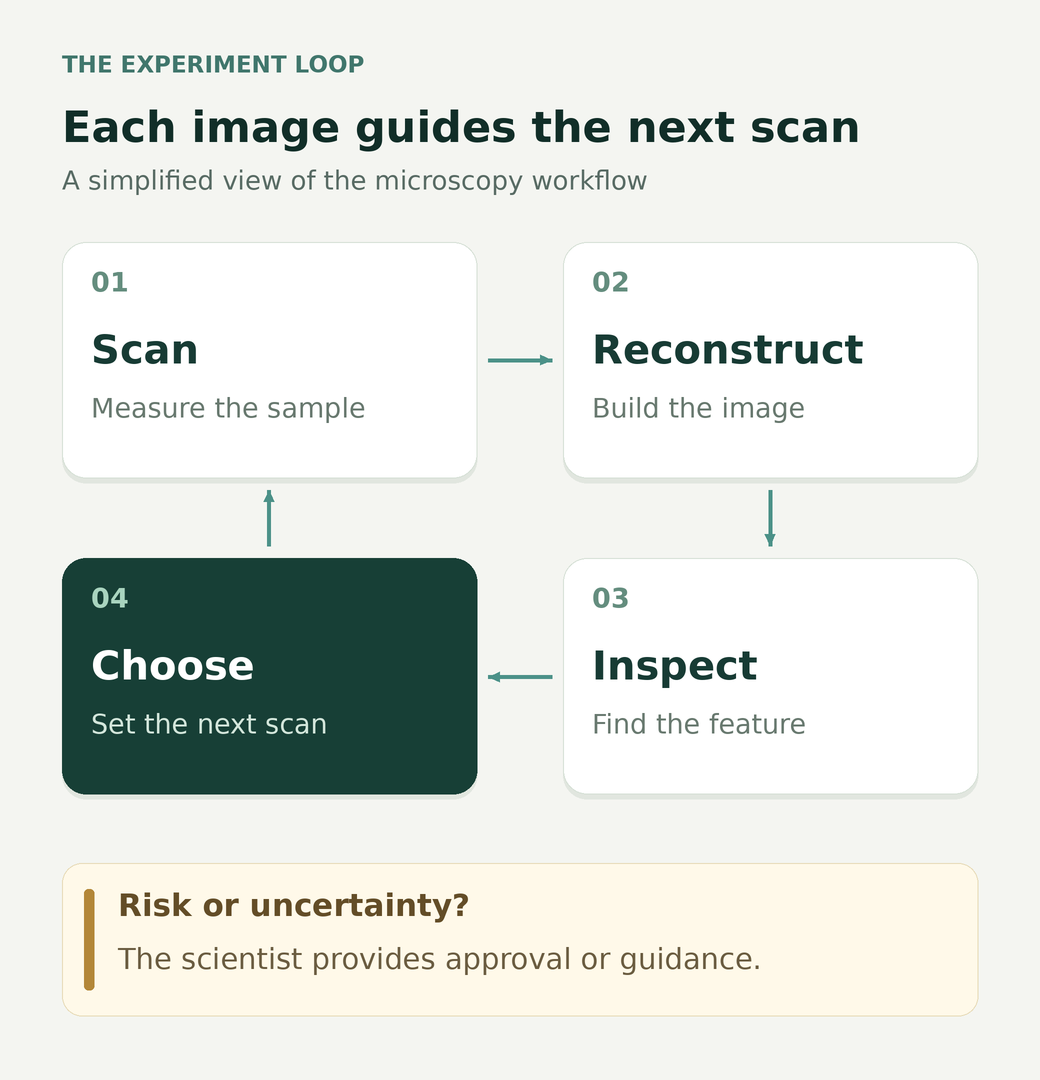
Think of the architecture in four steps: measure, reconstruct, inspect, choose. Repeating those steps makes the next measurement depend on the previous result.
There is ordinary software underneath that loop. The EAA project documentation describes tools, image handling and support for both agent-driven and rule-based workflows. Instrument actions still need concrete interfaces and parameters.
That distinction matters to developers. A language model can interpret a flexible request, while predictable calculations and established procedures remain in conventional code. Giving the model responsibility for every step would add uncertainty without automatically improving the experiment.
Autonomous microscopes already existed
The history makes the achievement easier to judge.
Argonne’s FAST work in 2023 already used AI to choose sampling locations and scan paths. Adaptive microscopy did not begin with this October report.
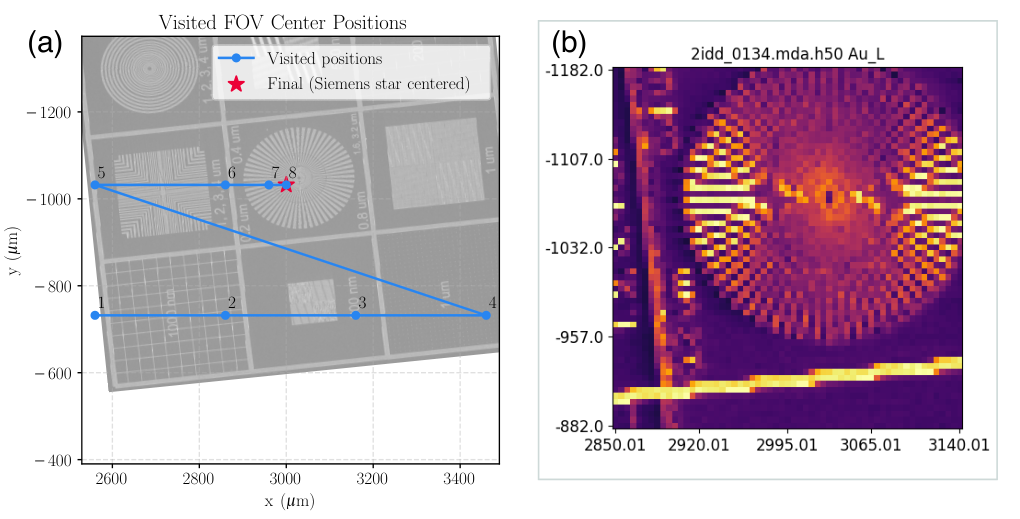
A February 2026 EAA preprint also demonstrated searching for a feature described in natural language. Its agent found a Siemens star test pattern through successive scans, although the final centring remained imperfect.
October’s report brings language-guided control, rapid reconstruction and segmentation together around a microelectronics search. I would describe it as an integration milestone toward more adaptable experiments.
Calling it the first microscope to decide where to look would erase the work that made it possible.
Why this deserves attention
The broader opportunity is reducing the work between a scientific question and a useful measurement.
Faster image analysis helps. Connecting that analysis to the next scan could also reduce repeated manual handoffs. The scientist can concentrate on the question, the interpretation and the decisions that need expertise.
The engineering test is practical: does the system find the right feature reliably, recognise uncertainty and recover when an observation is misleading?
A convincing demonstration invites those questions. It does not settle them.
For me, that is the useful way to understand this work: an agent becomes valuable when its observations improve its next action, and the surrounding software keeps those actions accountable.
At a microscope, that next action determines what we get to see.
Discover more from Nikhil Emmanuel's Blog
Subscribe to get the latest posts sent to your email.